Disclosure: NotaryStyle earns from qualifying purchases as an Amazon Associate. We independently research and recommend products. When you click links to buy products, we may earn a commission at no additional cost to you. Our recommendations are not influenced by commission — we only feature products we believe provide value to notaries.
This article is for informational purposes only and does not constitute legal advice. Laws regarding wills and notarizations vary significantly by state. Always consult with an estate planning attorney and check your specific state's notary laws before proceeding.
When someone asks you to act as a notary for a will, it’s completely normal to feel a slight sense of hesitation. Unlike notarizing a standard power of attorney or a vehicle title, notarizing a will carries heavy emotional and legal weight. If the notarization is done incorrectly, the document could be thrown out in probate court, leaving the testator's final wishes unfulfilled and their family in a bitter legal dispute.
However, the actual process of how to notarize a will is incredibly straightforward once you understand the mechanics. The anxiety usually stems from a misunderstanding of what the notary's role actually is. You are not validating the contents of the will, nor are you ensuring it is legally drafted. You are simply verifying the identity and willingness of the person signing it.
Here is your comprehensive guide to notarizing a will in 2026, including prerequisites, step-by-step instructions, and common pitfalls to avoid.
Understanding the Notary’s Role in Estate Planning
Before you pull out your Notary Stamp, you need to understand a crucial legal distinction that trips up many new notaries: in most jurisdictions, you are not actually notarizing the will itself.
Instead, you are typically notarizing a "Self-Proving Affidavit" that is attached to the last page of the will. A self-proving affidavit is a sworn statement made by the testator (the person whose will it is) and their witnesses. It states that they signed the will voluntarily, that the testator was of sound mind, and that the witnesses saw each other sign.
When a will has a properly notarized self-proving affidavit, the probate court will accept the document without requiring the witnesses to appear in person to testify. This drastically speeds up the probate process. If you are ever unsure about your state's specific requirements regarding self-proving affidavits, you should consult your state-specific notary guide or refer directly to your state's notary handbook.

Prerequisites Before You Begin
You should never rush into notarizing a will. There are several boxes that must be checked before anyone picks up a pen.
First, ensure the document is completely finalized. The testator should not be making edits or crossing things out while sitting at your desk. The will needs to be fully assembled, including the self-proving affidavit at the end.
Second, verify the witness requirements. Most states require two competent, disinterested witnesses to sign a will. "Disinterested" generally means they are not named as beneficiaries in the will. Some states allow interested witnesses, but this can sometimes invalidate the specific gift given to that witness or open the door to legal challenges. Because rules vary, it is best practice to ensure all witnesses are entirely unrelated to the testator and stand to inherit nothing.
Third, confirm that everyone will be in the same room at the same time. As a notary, you generally cannot notarize a will if the testator and witnesses signed on different days or in different locations. Everyone involved in the signing ceremony must be physically present together.
Materials You Will Need
Gather your supplies before the signers arrive to ensure the process goes smoothly. You will need:
- The fully drafted will and the attached self-proving affidavit
- Your state-approved Notary Journal
- Your notary stamp or seal
- A reliable pen (black ink is generally preferred for legal documents as it copies and scans better)
- Valid, government-issued photo identification for the testator and all witnesses
Having a well-organized Notary Supplies Kit ensures you never have to pause a sensitive signing ceremony to search for a missing tool.
Step-by-Step Process to Notarize a Will
Once everyone is gathered, the testator is ready, and you have verified all identities, follow these steps precisely.
Step 1: Verify the identities of all signers Examine the government-issued photo IDs of the testator and every witness. Ensure the names on the IDs reasonably match the names written on the will and the affidavit. If a recently married woman is signing with her new last name but her ID still shows her maiden name, you may need to see a marriage certificate to bridge the gap, depending on your state's laws.
Step 2: Perform a thorough screening for willingness and awareness This is arguably your most important job. Look at the testator. Are they coherent? Do they understand that they are signing a will? Are they acting under obvious duress, or is someone in the room aggressively coaching them on what to do? If you suspect the testator lacks mental capacity or is being coerced, you must refuse the notarization.
Step 3: Have the testator sign the will Instruct the testator to sign the will in front of you and the witnesses. They should sign exactly as their name is typed on the document (e.g., if it says "Robert J. Smith," they shouldn't just sign "Bob Smith").
Step 4: Have the witnesses sign the will Immediately after the testator signs, instruct the two witnesses to sign the will in the testator's physical presence and in your presence.
Step 5: Move to the Self-Proving Affidavit Once the will itself is signed by all parties, turn to the self-proving affidavit. The testator and the witnesses will need to sign this document as well.
Step 6: Administer the oath or affirmation Because the affidavit is a sworn statement, you must verbally administer an oath. You can ask the testator and witnesses to raise their right hands and say, "Do you solemnly swear or affirm that the statements in this affidavit are true and correct to the best of your knowledge?" Wait for them to verbally reply "Yes" or "I do" before letting them sign.
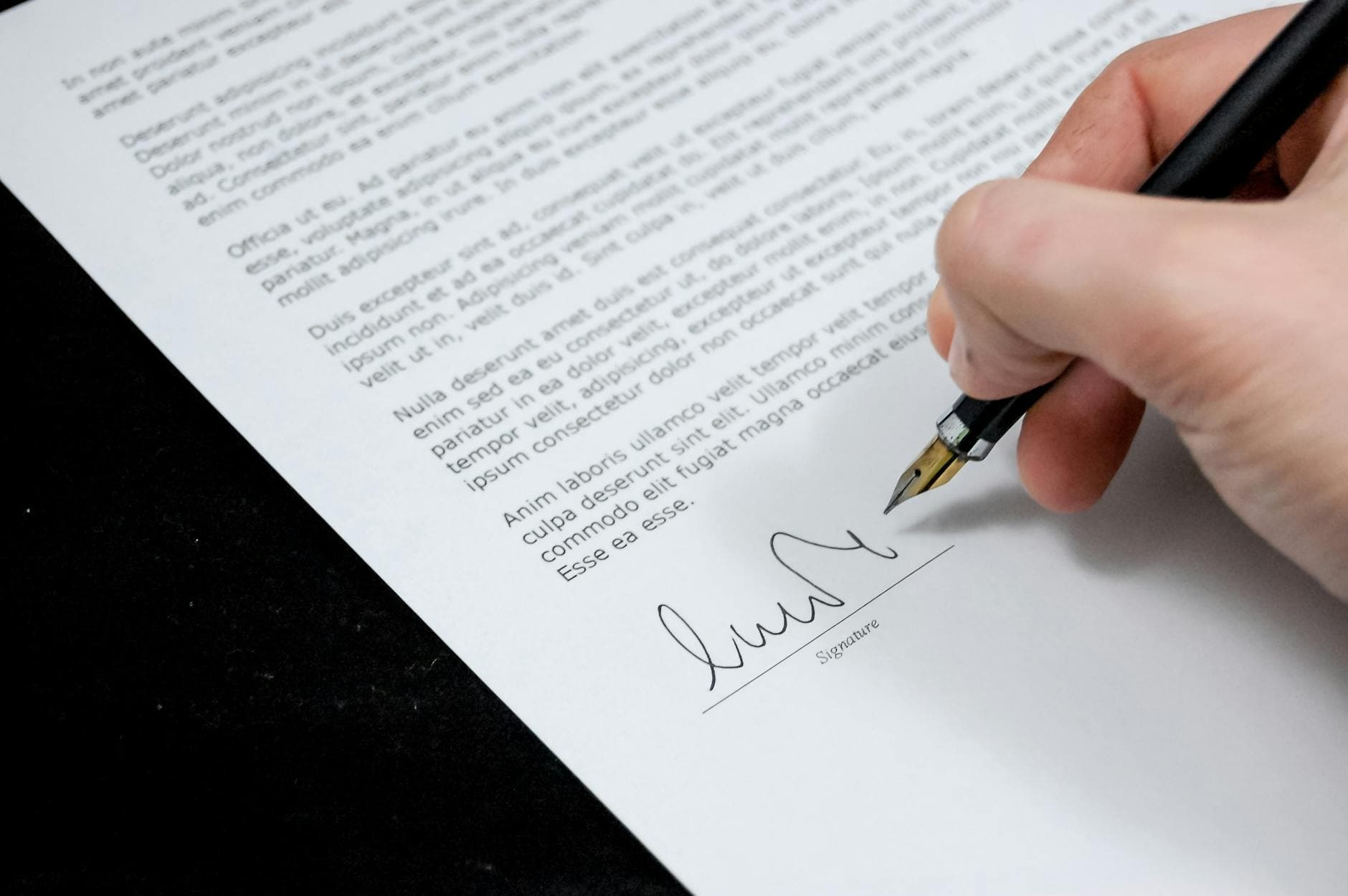
Step 7: Witness the signing of the affidavit Have the testator and both witnesses sign the affidavit in your presence.
Step 8: Complete your notarial certificate Fill out the jurat block (the notarial wording) on the affidavit. This will typically include the date, the location (county and state), and the names of the signers. Sign your name exactly as it appears on your commission, and apply your official notary seal. Ensure the seal impression is clear and does not overlap any text or signatures.
Step 9: Record the transaction in your notary journal Even if your state does not legally require you to keep a journal, it is highly recommended—especially for high-stakes documents like wills. Record the date and time of the notarization, the type of document (describe it as "Last Will and Testament with Self-Proving Affidavit"), the names and addresses of the testator and witnesses, the type of ID they presented, and your signature. For more best practices on this, check out our notary journal best practices guide.
Common Mistakes to Avoid
Even experienced notaries can make errors when handling estate documents. Here are the most common mistakes you need to guard against:
Notarizing a document that is already signed Sometimes, a testator will sign their will at home, bring it to your office, and ask you to "just stamp it." If the self-proving affidavit requires a jurat, the signers must sign in your physical presence after you administer an oath. Stamping an already-signed affidavit without witnessing the signature is a serious compliance violation.
Allowing signers to leave early All signers must remain present until the entire process is complete. If a witness signs the will but has to leave before signing the self-proving affidavit, you cannot proceed. You must start over with a new witness.
Using the wrong notarial wording Wills and their accompanying affidavits typically require a "Jurat" (because the signer is swearing to the truth of the statement). If you accidentally attach an Acknowledgment certificate instead, the self-proving status of the will could be invalidated. Always check the pre-printed language on the document, and if it lacks a certificate, consult an attorney to determine which one to attach.
Advising the testator on the contents of the will As a notary, you are forbidden from practicing law. If the testator asks you, "Does this clause mean my son gets the house?" or "Should I add a residuary clause?", you must politely decline to answer. Recommending changes or explaining legal clauses constitutes the unauthorized practice of law (UPL) and can result in the loss of your notary commission.
Troubleshooting Tips
What if a signer doesn't have an ID? If a witness or the testator forgets their ID, you cannot proceed with standard identification methods. In some states, you may use credible witnesses—people who know the signer and can vouch for their identity under oath. However, using credible witnesses for a will notarization is highly risky and frowned upon in the estate planning community because it adds an extra layer of potential dispute in probate. It is almost always better to reschedule the signing.
What if the testator is physically unable to sign? If the testator is paralyzed or too weak to hold a pen, they can generally direct someone else to sign on their behalf. This is known as a "signature by mark" or signing "by proxy." The testator must consciously direct the proxy to sign, and the proxy must sign the testator's name next to their own name (e.g., "John Doe by Jane Doe, his authorized proxy"). You should note this in your journal and ensure your state laws permit signature by proxy for wills.
What if the will consists of multiple pages? To prevent pages from being swapped out or altered after the fact, it is a good practice to have the testator and witnesses initial the bottom corner of every single page, not just the last page. While not strictly required by notary law in every state, it is a standard estate planning precaution that helps protect the integrity of the document.
Frequently Asked Questions
Can I notarize a will for a family member? In most states, you are strictly prohibited from notarizing documents for immediate family members, including spouses, parents, and children. Even if your state's laws are silent on the matter, notarizing a will for a relative creates a massive conflict of interest. If the will is ever contested in court, your notarization will immediately become a target for the opposing party, who will argue that you had a financial interest in the outcome of the estate. It is best to always decline these requests.
Does a will absolutely have to be notarized? A will does not technically have to be notarized to be legally valid in most states. A will that is properly signed by the testator and witnessed by the required number of competent adults is generally valid. However, without a notarized self-proving affidavit, the probate court will require the witnesses to appear in court or submit sworn depositions to prove the will's validity. This causes delays and added expense for the family, which is why attorneys almost universally recommend having the self-proving affidavit notarized.
Can I notarize just the will without an affidavit? Generally, no. Standard wills do not contain notarial blocks for the notary to fill out. If someone hands you a bare will with no self-proving affidavit attached and asks you to notarize it, there is no legal mechanism for you to do so. You should politely explain that they need a self-proving affidavit prepared by an attorney.
How much does it cost to notarize a will in 2026? As of 2026, notary fees are still regulated at the state level. In states like Florida and Texas, you are typically limited to charging $10 per notarization. In California, the maximum fee is usually $15. However, many notaries offer estate planning signings as a package deal. Because the notary is handling the testator and two witnesses, this technically involves three separate notarizations (on the affidavit). Mobile notaries who travel to hospitals or nursing homes often charge a travel fee on top of the standard per-signature state maximums.
What happens if I make a mistake on the notarization? If you realize you made a minor clerical error—such as writing the wrong date or misspelling a witness's name—do not try to use white-out or scribble it out. In most jurisdictions, you can line through the error neatly, write the correct information, and initial next to the correction. If the mistake is more severe, such as using the wrong type of notarial certificate or failing to administer the oath, the affidavit may need to be re-drafted and re-signed entirely. Always consult your state's notary handbook for specific correction procedures.