Disclosure: NotaryStyle earns from qualifying purchases as an Amazon Associate. We independently research and recommend products. When you click links to buy products, we may earn a commission at no additional cost to you. Our recommendations are not influenced by commission — we only feature products we believe provide value to notaries.
This article is for informational purposes only and does not constitute legal advice. Notary laws vary significantly by state. Always check with your state's Secretary of State or consult a qualified attorney for specific legal questions regarding notarizations.
If you've been asked to notarize a copy of a document, you're dealing with a request for a certified true copy. This is one of the more misunderstood tasks in the notary world, largely because the rules change dramatically depending on where you are commissioned.
A certified copy notary essentially serves as a human photocopier with a seal. By attaching your notarial certificate to a reproduction, you are officially stating that the copy is a true, exact, and complete representation of the original document. However, before you slap your stamp on anything, you need to understand the strict boundaries of this process.
Here is your comprehensive guide on how to notarize a copy of a document, including prerequisites, step-by-step instructions, and the pitfalls you need to avoid.
The First Hurdle: State Authorization
Before we dive into the steps, we have to address the most critical prerequisite: your state's laws.
As of 2026, the majority of U.S. states do not allow their notaries to perform copy certifications. States like California, New York, and Texas explicitly prohibit notaries from certifying copies of any document, with very narrow exceptions (like copying entries in a notary's own journal).
Conversely, states like Florida, Virginia, and Pennsylvania do grant this authority. If you are commissioned in a state that prohibits copy certifications and a client asks you to notarize a copy of a document, you must decline the request and direct them to the originating agency or an attorney. You can review your specific state's rules in our complete guide to state notary laws.
Documents You Typically Cannot Certify
Even if your state allows you to act as a true copy notary, there are universal restrictions on what you can copy. You generally cannot certify copies of:
- Vital Records: Birth certificates, death certificates, and marriage licenses. These must be obtained directly from the county clerk or department of health.
- Public Records: Court records, deeds, and patents. The custodian of those records (like the county recorder) is the only entity authorized to issue certified copies.
- Federal Documents: Naturalization certificates, green cards, and passports (though some states allow copy certifications of passports for specific use cases).
- Documents with No Original: You cannot certify a copy of a copy. You must always compare the reproduction to the original, physically existing document.
Materials You Will Need
If you've confirmed that both your state allows this act and the document is permissible, gather your supplies. Having everything ready before the signer arrives keeps the process professional and efficient.
- The original document in good, readable condition
- A high-quality photocopier or scanner (you must make the copy yourself to verify its accuracy)
- A Premium Notary Stamp that meets your state's exact specifications
- Appropriate notarial certificate wording (often called a "Copy Certification" certificate)
- Your Professional Notary Journal for recording the act
- A reliable Notary Seal Embosser (if required or preferred in your state for added security)
Step-by-Step Guide to Notarizing a Copy of a Document
When you are ready to proceed, follow these sequential steps to ensure the notarization is executed flawlessly.
1. Require the Document Custodian to Appear
Unlike an acknowledgment where the signer must appear, a copy certification requires the document custodian to appear. The custodian is the person who has physical possession of the original document. They do not necessarily need to be the person who signed the document (for example, a HR manager can be the custodian of an employee's file), but they must appear before you in person.
2. Verify the Document is Permissible
Ask to see the original document. Look at it closely. Is it a birth certificate? A court record? If it falls into the prohibited categories mentioned above, stop the process and explain why you cannot proceed.
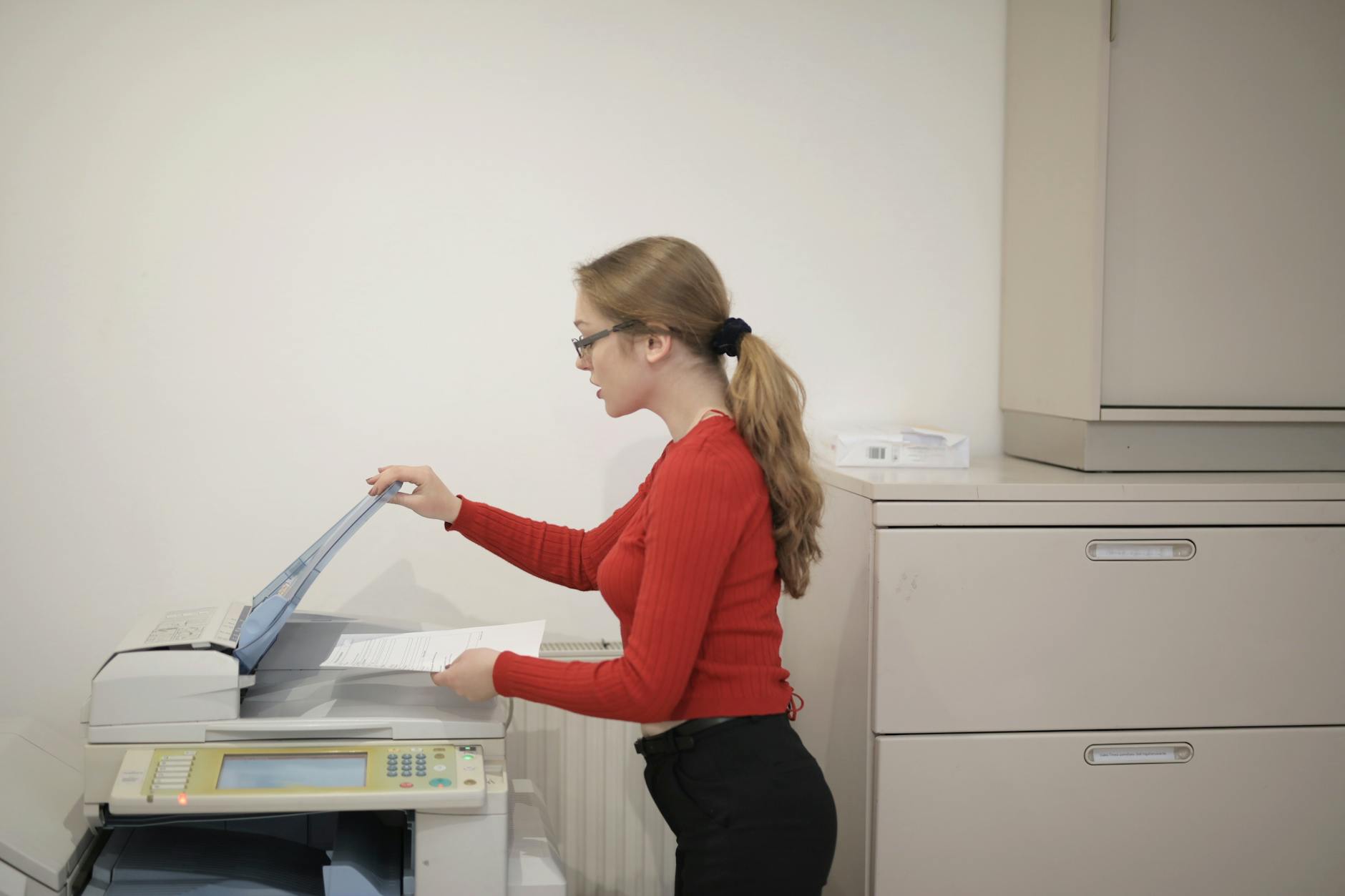
3. Make the Copy Yourself
This is where many notaries make mistakes. Do not allow the custodian to hand you a copy they brought from home. To certify that the copy is accurate, you generally must witness the copying process or make the copy yourself using your own equipment. If the document is multi-page, copy every single page, including blank backs of pages if they contain relevant stamps or watermarks.
4. Compare the Copy to the Original
Place the original and the copy side-by-side. Go through them page by page. Check that:
- All text matches exactly.
- No pages are missing.
- The copy quality is clear and legible.
- No markings were added or omitted.
5. Complete the Notarial Certificate
You must attach a specific notarial certificate for a copy certification. Do not use an acknowledgment or jurat certificate, as those are for signatures and oaths, not document reproduction. The certificate will generally state something along the lines of:
"I certify that the preceding or attached document is a true, correct, and complete copy of the original document presented to me..."
Fill in the custodian's name, the date, and your location (county and state). If your state requires you to identify the type of document being copied, fill in that blank as well. For more details on choosing the right form, check out our guide on types of notary certificates.
6. Sign, Seal, and Staple
Sign your name exactly as it appears on your commission. Apply your notary stamp clearly and legibly, ensuring it does not overlap with any text on the certificate. Finally, securely staple the certificate to the copy of the document. In many jurisdictions, loose certificates must be affixed in a way that prevents them from being tampered with or swapped onto a different document.
7. Record the Act in Your Journal
Even if your state does not legally require you to keep a notary journal, it is highly recommended that you do. Record the date and time of the notarization, the type of act (Copy Certification), the name and address of the document custodian, the type of document copied, and your signature. If you need a refresher on best practices, read our article on how to fill out a notary journal.
Common Mistakes to Avoid
Even experienced notaries can stumble when asked to notarize a copy of a document. Here are the most frequent errors and why you should avoid them:
- Certifying from a copy instead of the original: If someone hands you a copy and asks you to certify it as a true copy of an original they left at home, you cannot do it. You have no way of knowing if the copy was altered. The rule exists to prevent fraud.
- Using the wrong certificate wording: A copy certification is a statement of fact made by you regarding the document, not a statement made by the signer. Using an acknowledgment form creates a legally confusing document that will likely be rejected by the receiving party.
- Allowing the customer to use a self-serve copier: If you work in a shipping store or an office with a public copier, the custodian must make the copy in your direct line of sight. You are the verifier of the reproduction process.
Troubleshooting Tips for Tricky Situations
Not every request is straightforward. Here is how to handle a few common curveballs you might encounter in 2026.
What if the original document won't fit in a standard copier? Large blueprints, oversized property maps, or bound books can't easily be copied. In some states, you are permitted to type out a detailed affidavit describing the physical characteristics of the document, its condition, and certifying that a standard copy was impossible to make. However, you should check your state's specific guidelines before attempting this workaround.
What if the document is in a foreign language? You can generally certify a copy of a foreign-language document, provided it is not a vital record from another country (like a foreign birth certificate). You do not need to be able to read the language; you are only certifying that the visual reproduction matches the original. It is helpful to note on the certificate that the document is in a foreign language.
What if the original document is faded or damaged? If the original is hard to read, make sure you adjust the copier settings to produce the clearest possible reproduction. If the copy is entirely illegible, it might be best to decline the request, as the purpose of a certified copy is usability. A receiving agency may reject a certified copy that they cannot read.
What if the document has been altered with white-out? Proceed with extreme caution. If the original document has obvious unauthorized alterations, you should refuse to certify the copy. If there are official stamps or notations made by an agency, those should be faithfully reproduced, but obvious signs of tampering invalidate the integrity of the document.
Frequently Asked Questions
How much can I charge to notarize a copy of a document? Fees vary entirely by state. In 2026, many states classify a copy certification as a standard notarial act and allow you to charge your maximum standard fee (which ranges anywhere from $2 to $15 per act). Some states may allow you to charge a per-page fee in addition to the notarial fee. Always verify your state's fee schedule.
Is a certified copy the same as a notarized copy? In common conversation, people use these terms interchangeably, and they generally mean the same thing. However, technically, you are not notarizing the copy—you are notarizing a certificate that attests to the accuracy of the copy. The notary stamp goes on the certificate, not directly on the copied document itself.
Do I need the document owner's permission to certify a copy? You need the permission and physical presence of the document custodian (the person holding the document). If someone brings you their roommate's original diploma without the roommate present, you cannot legally certify a copy of it because you cannot verify the custodian's identity or authority.
What should I do if my state doesn't allow certified copies? If your state prohibits you from acting as a true copy notary, you can suggest a few alternatives to your client. They can contact the agency that issued the original document to obtain a certified copy. Alternatively, in some situations, the document holder can sign a written declaration stating "I swear this is a true copy of the original," which you could then notarize using a jurat. However, advise them to check with the receiving agency first, as this workaround is not always accepted.