Disclosure: NotaryStyle earns from qualifying purchases as an Amazon Associate. We independently research and recommend products. When you click links to buy products, we may earn a commission at no additional cost to you. Our recommendations are not influenced by commission — we only feature products we believe provide value to notaries.
This article is for informational purposes only and does not constitute legal advice. Notary laws vary significantly by state. Always consult your state's notary handbook or a qualified attorney for specific legal guidance.
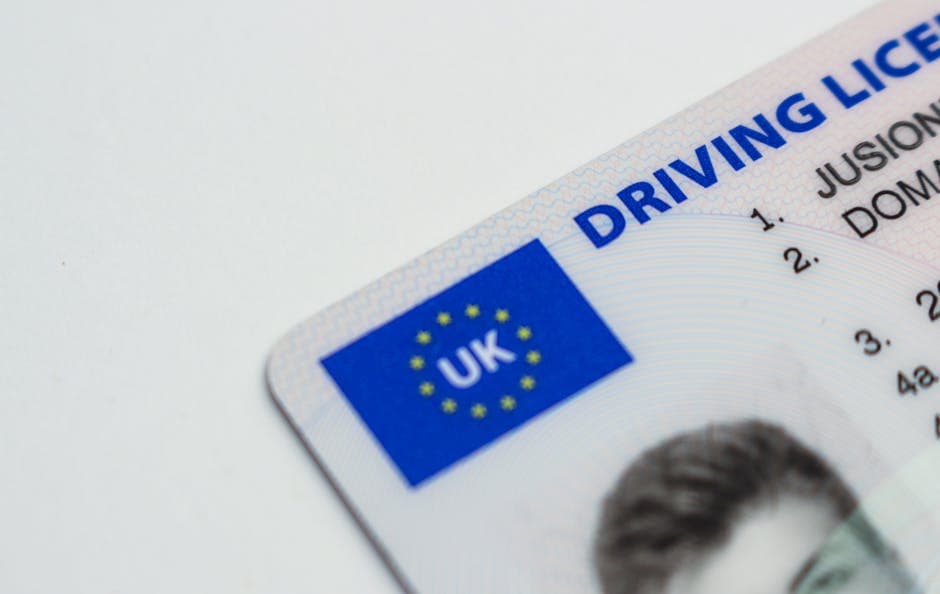
Every notary public has been there. You have your journal open, your stamp ready, and your notary seal within reach. The signer hands you their document, but when you ask for identification, they slide a faded student ID, a credit card, or a gym membership across the table.
Handling a signer no ID notary situation is one of the most uncomfortable parts of the job. You want to be helpful, but you also know that your commission—and potentially your freedom—relies on following the law. When faced with this scenario, you cannot simply "make it work." You must rely on specific, legally sanctioned alternatives, or you must refuse the notarization.
Here is a comprehensive guide on what to do when a signer does not have acceptable ID, including the legal reasoning behind each step and how state variations might impact your process.
Why Strict Identification Rules Exist
Before diving into the solutions, it is crucial to understand why notary identification requirements are so rigid. As a notary public, you are appointed by your state to serve as a neutral, impartial witness. Your primary function is to deter fraud by verifying that the person standing in front of you is exactly who they claim to be.
If a bad actor forges someone's signature on a deed or a power of attorney, and you notarize it without properly identifying them, you have essentially provided the state's stamp of approval on a criminal act. This is why acceptable ID notary standards almost universally require government-issued identification. A government ID contains security features (holograms, watermarks, embedded chips) and is tied to a centralized database, making it incredibly difficult to forge convincingly. A gym card or a workplace badge lacks these safeguards, which is why they are almost never acceptable.

1. Verify Whether the ID is Actually Unacceptable
Before jumping to alternatives, double-check your state's specific list of acceptable identification. Many notaries mistakenly reject valid IDs because they assume the rules are stricter than they actually are.
Generally, acceptable identification must be current or issued within the past few years, contain a photograph, and include a physical description and signature. However, state variations are common. For example, in California, a driver's license from another state is acceptable, but in some highly restricted states, only in-state IDs are permitted without additional proof.
What about expired IDs? This is a frequent point of confusion. Most states will not accept an expired ID. The legal reasoning here is straightforward: once an ID expires, the issuing agency (like the DMV) is no longer vouching for the accuracy of the information on that card. However, some states (like Texas) allow expired IDs if the signer is elderly and the ID was valid within a certain timeframe. Always check your state notary guide for exact expiration rules.
2. Utilize Credible Witnesses
If the signer truly lacks acceptable ID, your best and most common solution is the use of credible witnesses. A credible witness is a person who swears under oath that they personally know the signer and can confirm their identity.
The legal reasoning behind credible witnesses is the "chain of trust." If you cannot verify the signer's identity directly through a government ID, you can verify the witness's identity through their government ID. Because the witness has a pre-existing relationship with the signer, they act as a human bridge of verification.
There are two distinct types of credible witness procedures, depending on your state:
- One Credible Witness: Used in states like Florida and Texas when the notary public personally knows the credible witness. Because you already know the witness is trustworthy, only one witness is needed to vouch for the signer.
- Two Credible Witnesses: Used when the notary does not know the credible witness. In this scenario, you must ID both witnesses with acceptable government IDs. They both take an oath swearing to the signer's identity. Why two? Because if you do not know the witnesses, having two unrelated individuals both swear to the same fact drastically reduces the likelihood of a coordinated conspiracy to defraud you.
Important note: In most states, a credible witness cannot be named in the document being signed (e.g., they cannot be the beneficiary of a will or a party to a real estate transaction) and generally must not have a financial interest in the transaction.
3. Check for Personal Knowledge Exemptions
Historically, notaries were allowed to rely on "personal knowledge"—meaning if you had known the signer for twenty years, you didn't need to see an ID at all.
In 2026, personal knowledge is becoming increasingly rare. Many states have completely abolished it from their statutes. The legal reasoning for this shift is that human memory and perception are fallible. People change physically over time, and even long-time acquaintances can be fooled in high-stress situations. States prefer the objective certainty of a laminated card with a photograph over a subjective feeling of familiarity.
If your state still allows personal knowledge (check your statutes carefully), you may proceed. However, best practice—even where legal—is to request an ID anyway if one is available. If the signer has no ID, and you do not have personal knowledge, you must move to credible witnesses or decline.
4. Look for Substituted Verification Methods
Some states have unique alternative verification methods that go beyond standard IDs or credible witnesses.
For example, in California, if a signer has no acceptable ID and credible witnesses are not available, the signer can use an "Oath of a Single Credible Witness" only if the witness has a valid government ID and the notary knows the witness. But California also allows a highly specific workaround: the signer can answer a series of personal questions based on their credit history or background through a third-party identity verification service, though this is typically reserved for loan signings utilizing specific platforms.
Another example is the "ID Card" issued by the DMV to individuals who do not drive. Many signers do not realize their state DMV issues a non-driver photo ID that holds the exact same legal weight as a driver's license for notarization purposes. Advising a signer to obtain one of these is often the easiest long-term solution.

5. Guide the Signer to Obtain Proper Identification
If you are in a state that does not allow credible witnesses, does not recognize personal knowledge, and the signer has absolutely no valid ID, your only option is to stop the notarization and help them figure out how to get an acceptable form of ID.
Be empathetic but firm. Explain that state law prohibits you from proceeding. You can point them toward their local Department of Motor Vehicles to apply for a state-issued ID card, or direct them to a local passport acceptance facility. Depending on the state in 2026, getting a DMV appointment might take a few days to a few weeks. If the document is time-sensitive (like a real estate closing), they may need to contact the receiving party to request an extension or an alternative signing method.
6. Decline the Notarization When Necessary
If all else fails, you must decline the notarization. Many notaries feel guilty about turning people away, especially in emotional situations like signing medical directives or closing on a dream home. However, refusing an improper notarization is not a failure; it is the ultimate demonstration of your duty as a notary public.
The legal reasoning here protects you from both criminal and civil liability. If you notarize a document for an improperly identified signer, and that document is later used to steal a home or drain a bank account, you can be investigated, fined, sued, or even jailed. No $15 notary fee is worth that risk.
When declining, do so politely and professionally. You might say: "I want to help you with this, but my state commission requires me to see a current government-issued photo ID or use credible witnesses. Since neither is available right now, I am legally unable to complete this notarization." Keep a detailed record of the refusal in your notary journal, if your state requires you to log refused transactions.
Common Pitfalls to Avoid
When navigating a signer no ID notary situation, watch out for these common traps:
- Accepting digital IDs: As of 2026, very few states have officially codified the acceptance of digital driver's licenses (like those on Apple Wallet or Google Wallet). Unless your state explicitly allows mobile IDs, require a physical card.
- Allowing the signer to take a photo of their ID at home: A photograph of an ID on a phone screen is not the physical ID. It lacks tactile security features and is incredibly easy to manipulate.
- Letting the credible witness leave: The credible witness must usually sign your journal and remain present during the entire notarization process. They cannot just pop in, vouch, and leave.
Frequently Asked Questions
Can I accept a temporary paper driver's license? It depends entirely on your state. Some states explicitly allow temporary paper IDs issued by the DMV, while others forbid them because they lack the security features of a permanent card. Always verify your state's stance on temporary paper IDs before accepting one.
What if the name on the ID doesn't exactly match the name on the document? Minor variations, like "John Doe" on the ID and "John A. Doe" on the document, are generally acceptable. However, if the ID says "John Doe" and the document says "Jonathan Doe," you typically cannot proceed unless the signer can provide supplemental documentation (like a marriage certificate or court order) linking the two names, or if your state has specific rules allowing for "reasonable certainty" of identity.
Can a family member of the signer act as a credible witness? In many states, yes, a family member can act as a credible witness, provided they have acceptable ID, are not named in the document, and have no financial interest in the transaction. However, some states explicitly prohibit parties related to the signer by blood or marriage from serving as credible witnesses.
Do I need to thumbprint the credible witness in my journal? A handful of states, most notably California, require a thumbprint for all deeds, powers of attorney, and other specific documents—but this applies to the signer, not necessarily the credible witness. Unless your state specifically mandates a thumbprint for the witness, a standard signature in your journal is typically sufficient.
Can I notarize for someone with a foreign passport? In most states, a valid, unexpired foreign passport with a photograph and a stamped visa or other DHS documentation is acceptable. However, because notaries are not trained in verifying foreign documents, some states are highly restrictive regarding international IDs. When in doubt, it i
Learn More: For the complete guide, visit our Notary Laws and Requirements: What Every Notary Must Know in 2026 page.
s safest to request a U.S. form of identification.