Disclosure: NotaryStyle earns from qualifying purchases as an Amazon Associate. We independently research and recommend products. When you click links to buy products, we may earn a commission at no additional cost to you. Our recommendations are not influenced by commission — we only feature products we believe provide value to notaries.
This article is for informational purposes only and does not constitute legal advice. Notary laws vary significantly by state. Always consult your state's notary handbook or a qualified attorney for specific legal questions regarding accessible notarization.
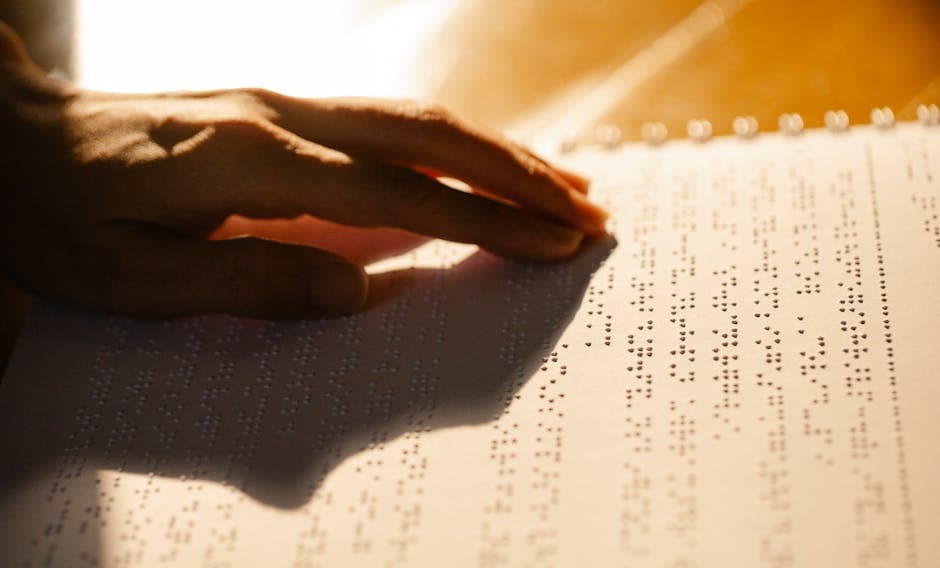
As a notary public, you serve as an impartial witness and a gatekeeper against fraud. But what happens when the signer standing in front of you cannot see the document they are signing? For many notaries, encountering a blind or visually impaired signer can cause a moment of panic. They worry about liability, unauthorized practice of law (UPL), and whether they are even allowed to proceed.
Here is the most important thing to understand: blindness does not negate legal capacity. A blind person has the exact same right to execute legal documents as a sighted person. Providing an accessible notarization is not just a professional courtesy; in many contexts, it is a legal requirement under the Americans with Disabilities Act (ADA) and state anti-discrimination laws.
To help you navigate these situations with confidence, here are the essential rules and legal reasoning behind notarizing for the blind or visually impaired.
1. Understand the Difference Between "Reading" and "Awareness"
The most common misconception among notaries is that a signer must visually read the document for the notarization to be valid. This is simply not true.
When you notarize a document, your primary legal duties are to verify the identity of the signer, ensure they are signing willingly, and confirm they are aware of what they are signing. The law generally requires "awareness," not "visual comprehension."
Consider a real estate transaction. A blind homeowner is refinancing their mortgage. They have likely spent hours with their attorney or loan officer, who read the deed of trust and closing disclosures aloud to them. By the time they reach your notary desk, they understand the financial commitment they are making. Your job as the notary is not to test their comprehension of the mortgage terms, but to verify they are indeed the person who intends to sign those specific documents.
If you refuse to notarize solely because the signer cannot see the paper, you are generally engaging in unlawful discrimination. To learn more about your fundamental duties in these scenarios, check out our complete guide to notary best practices.

2. Communicate Directly With the Signer
When a visually impaired signer arrives with a companion, spouse, or caregiver, the natural human instinct is to direct your conversation to the sighted person. As a notary, you must actively fight this instinct.
The legal reasoning here revolves around the prevention of undue influence and coercion. Elder abuse and financial exploitation are rampant, and visually impaired individuals are statistically vulnerable. If you ask the companion, "Is she ready to sign?" or "Does he understand this?", you are relying on a potentially biased third party.
You must speak directly to the signer. Ask them their name, ask them to confirm their address, and ask them directly if they understand the document and are signing willingly. If the signer answers confidently and clearly, you have generally satisfied the "willingness" requirement. If the companion repeatedly interrupts or answers on behalf of a capable adult, view that as a red flag that requires you to slow down the process.
3. Navigating Document Reading and Unauthorized Practice of Law (UPL)
This is where notaries get into the most trouble. A visually impaired signer may ask you, "Can you read this to me?" Your answer will depend entirely on your state's laws, but you must tread incredibly carefully.
In most states, a notary public is strictly prohibited from giving legal advice or explaining the meaning of a document. If you summarize a document for a blind signer ("This just means you're giving your son power of attorney"), you have likely committed UPL. The legal reasoning is strict: you are not an attorney, and any paraphrasing you do could accidentally misrepresent the legal binding nature of the text.
However, some states draw a line between explaining a document and reading a document verbatim. In a few states, reading the document word-for-word is permissible, provided you do not offer any commentary. But in other states, even reading the document aloud crosses the line into UPL because you are acting as a legal intermediary.
The safest approach: Politely decline to read or explain the document. Instead, ask the signer if they have had the document explained to them by an attorney, their agent, or the document preparer. If they say yes, and they acknowledge they understand it, proceed. If they say no, and they do not understand what they are signing, you should generally refuse the notarization because the signer lacks awareness. For state-specific guidance, review your local regulations, such as our California notary handbook overview.
4. Use Credible Witnesses When Identification is an Issue
Verifying identity is a standard requirement, but what if the visually impaired signer does not possess acceptable photo ID? Maybe their wallet was stolen, or their state ID is expired.
In this scenario, you can generally rely on the use of credible witnesses. A credible witness is a person who personally knows the signer and can swear under oath to the signer's identity.
The legal reasoning behind credible witnesses is that identity verification is about certainty, not about the specific type of plastic card a person holds. If a trusted member of the community can vouch for the blind signer, the risk of fraud is mitigated.
Keep in mind that state rules for credible witnesses vary wildly. For example, Florida generally requires two credible witnesses who do not have a financial interest in the document. California requires one credible witness if the notary personally knows the witness, or two if the notary does not. Always check your state's specific credible witness statutes before proceeding.
5. Accommodate Signature Execution Without Overstepping
A visually impaired signer may need physical accommodations to sign their name. Some blind individuals have perfectly legible signatures because they learned to write before losing their sight, or they use signature guides (plastic or metal stencils with a cutout for the signature line).
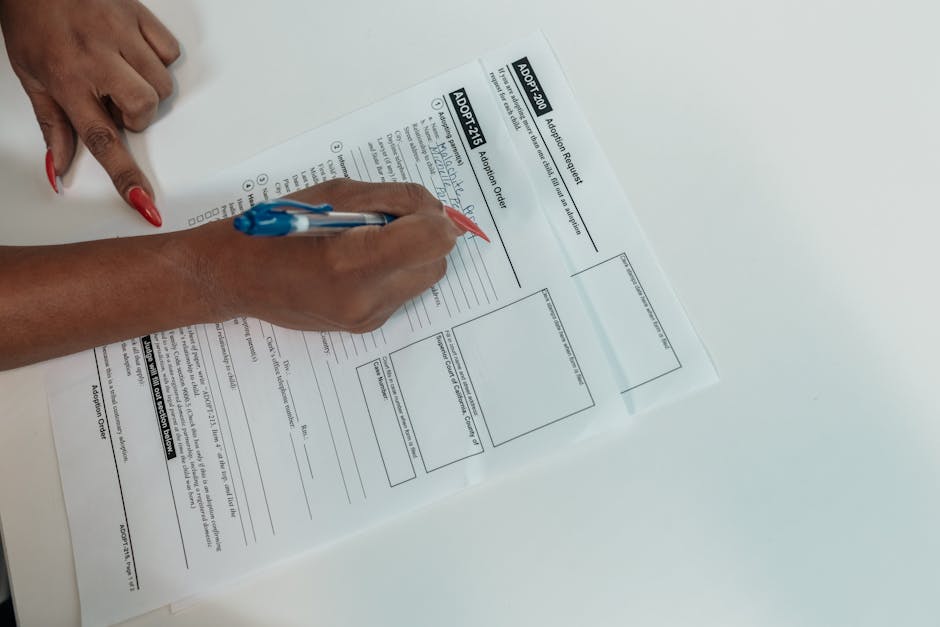
If a signer asks you to guide their pen to the signature line, can you do it? Generally, yes, but with strict limitations. You may physically guide their hand to the correct space on the paper so they know where to sign. However, you absolutely cannot apply pressure to their hand or in any way influence the actual formation of their signature. The signature must be entirely their own physical act.
If the signer is physically unable to sign at all, they may need to use a signature by mark. This typically involves the signer making an "X" or other simple mark. State laws usually require two disinterested witnesses to be present for a signature by mark—one to witness the mark, and one to write the signer's name next to the mark. As the notary, you generally cannot act as one of these witnesses.

6. Document Everything in Your Notary Journal
Your notary journal is your first line of defense if a notarization is ever challenged in court. When notarizing for a blind signer, your journal entry should be exceptionally detailed.
While standard journal entries typically include the date, type of document, signer name, and ID used, you should add a specific note regarding the accessibility accommodation. For example, you might write: "Signer is visually impaired. Signer confirmed awareness and willingness to sign. Signer used a signature guide. Communication was directed solely to the signer; no signs of coercion observed."
The legal reasoning for this is simple: memory fades, and litigation takes years. If someone claims five years from now that the signer was confused or coerced, your contemporaneous journal entry proves that you actively assessed the situation and acted as a proper impartial witness. To ensure your records hold up, consider using a premium notary journal with ample space for detailed notes.
Understand State Variations in Accessibility Laws
While the fundamental principles of accessible notarization are relatively consistent, the exact mechanisms vary by state. As of 2026, several states have updated their notary laws to explicitly address accessibility, often in response to the rise of Remote Online Notarization (RON).
For instance, some states require that RON platforms provide audio-assisted accessibility features for visually impaired users. Other states have specific statutes outlining exactly how a notary must interact with a blind signer to satisfy the "awareness" requirement. Never assume that your general knowledge of notary law is enough; always double-check your state's specific statutes regarding disabled signers. You can find state-specific breakdowns in our state notary guides.
The Bottom Line
Providing an accessible notarization is not an burden—it is a core part of your duty to serve the public. Blind and visually impaired individuals enter into contracts, buy homes, file taxes, and execute wills every single day. By understanding the legal distinction between reading and awareness, protecting against undue influence by communicating directly with the signer, and meticulously documenting the process in your journal, you can confidently and lawfully serve these individuals.
Frequently Asked Questions
Can I legally refuse to notarize for a blind signer?
Generally, no. Refusing to notarize a document solely because the signer is blind or visually impaired is considered unlawful discrimination under the Americans with Disabilities Act (ADA) and various state laws. You may only refuse a notarization if you cannot verify the signer's identity, the signer does not appear aware of what they are signing, or you believe the signer is being coerced.
Do I need to read the entire document aloud to a visually impaired signer?
It depends on your state. In most states, reading a document aloud for a blind signer is either permitted or a gray area, provided you read it verbatim without explaining or summarizing it. However, some states strictly prohibit notaries from reading documents to signers to avoid any implication of legal advice. Check your state laws carefully. The safest practice is to ask the signer if they have already had the document reviewed by an attorney or the preparing party.
What if I suspect a caregiver is forcing a blind person to sign?
If you suspect undue influence or coercion, you must stop the notarization. As an impartial witness, your role is to ensure the signer is acting willingly. Separate the signer from the caregiver if possible, ask the signer direct, probing questions in private, and if you are not completely satisfied that the signer is acting of their own free will, decline the notarization and note the details in your journal.
Can a blind person use a signature stamp instead of signing their name?
In most states, no. A signature stamp is generally treated differently than a signature by mark. Most state laws require a signature to be a physical act performed by the individual, either by handwritten name or a mark (like an "X"). However, a few states allow signature stamps for individuals with physical disabilities if specific conditions are met. You should verify your state's stance on signature stamps versus signature by mark.
How does Remote Online Notarization (RON) work for blind signers?
RON platforms operating in 2026 are generally required to meet strict web accessibility standards (like WCAG guidelines). This means a visually impaired signer can use screen-reading software to navigate the platform, verify their identity through knowledge-based authentication (KBA) or credential analysis, and sign electronically. The notary still must verify awareness and w
Learn More: For the complete guide, visit our Notary Laws and Requirements: What Every Notary Must Know in 2026 page.
illingness verbally through the audio-visual feed.