Disclosure: NotaryStyle earns from qualifying purchases as an Amazon Associate. We independently research and recommend products. When you click links to buy products, we may earn a commission at no additional cost to you. Our recommendations are not influenced by commission — we only feature products we believe provide value to notaries.
This article is for informational purposes only and does not constitute legal advice. Notary laws vary significantly by state. Always check with your state's notary commissioning authority and consult with a qualified attorney if you have specific legal questions regarding notarizing vital records.
If you have ever been approached by a newlywed couple or an officiant asking you to notarize a marriage certificate, you know that this particular request can be deceptively complex. Unlike a standard acknowledgment on a business contract, dealing with vital records requires a careful understanding of your state's specific laws.
In 2026, with international travel, remote work, and immigration processes more common than ever, the demand for a marriage certificate notary continues to rise. People frequently need these documents notarized for apostilles, foreign visa applications, or to update their names with federal agencies like the Social Security Administration.
However, before you pull out your seal, you need to understand the critical difference between a marriage license and a marriage certificate, and exactly who is required to appear before you. Here is your comprehensive guide on how to properly notarize a marriage certificate.
Understanding the Document: License vs. Certificate
One of the most common mistakes notaries make is confusing a marriage license with a marriage certificate.
A marriage license is the legal document obtained before the wedding. It authorizes a couple to get married. Depending on your state, this document might require notarization prior to the ceremony, often when the couple applies for the license at the county clerk's office.
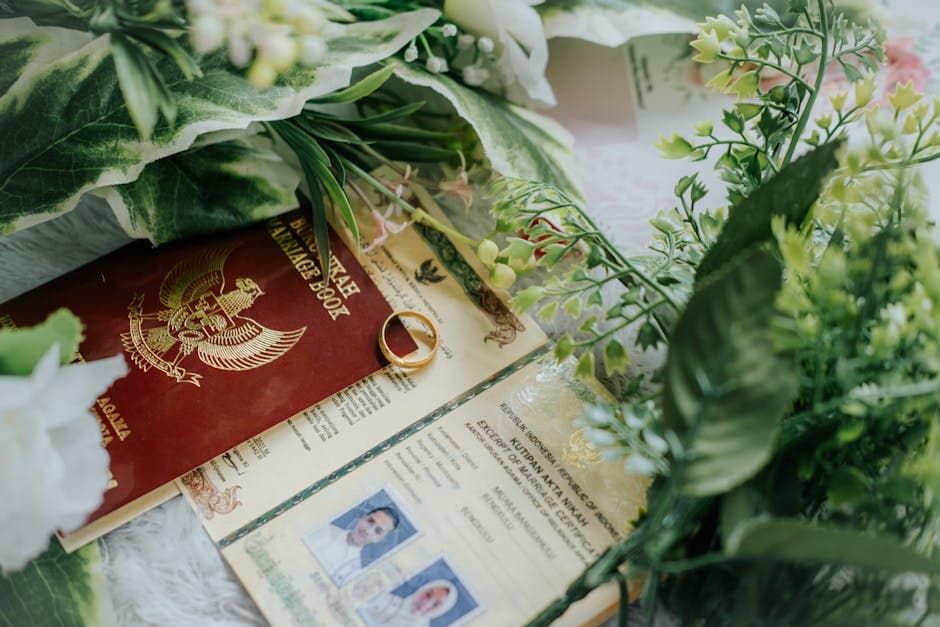
A marriage certificate is the document issued after the wedding has taken place. It serves as the official legal record that the marriage occurred. It is typically signed by the couple, the officiant, and sometimes witnesses.
When clients ask you to notarize a marriage certificate, they are almost always referring to the post-ceremony document. However, you must carefully examine the document to determine exactly what needs to be notarized and who is signing.

Prerequisites Before You Begin
Before you agree to perform this notarization, you must ensure that all legal prerequisites are met. Failing to do so can result in disciplinary action from your state's notary commissioning authority.
1. Identify the Signer
Look closely at the notarial wording on the document. Is the notarial block for the couple, or is it for the officiant? In most states, the notarial block on a marriage certificate is for the officiant who performed the ceremony. The officiant is swearing that they solemnized the marriage according to state law. Occasionally, the notarial block may be for the witnesses.
2. Ensure Personal Presence
Regardless of who is signing, the signer(s) must appear physically before you. You cannot notarize a marriage certificate based on a phone call, a video chat (unless your state specifically authorizes Remote Online Notarization for vital records, which is exceedingly rare in 2026), or a signed document left on your desk.
3. Verify Document Completeness
Never notarize an incomplete document. The marriage certificate should be fully filled out with the couple's information, the date and location of the ceremony, and the officiant's details. If there are blank spaces (especially the date of the marriage), do not proceed.
4. Check State-Specific Rules
Some states prohibit notaries from placing their seal on a vital record altogether. In other states, the notarization is strictly limited to the officiant's affidavit attached to the certificate. Always review your state's notary laws before proceeding.
Materials You Will Need
To execute this notarization properly, ensure you have the following items ready:
- Your current notary commission certificate: You should always have this on hand to prove your authority.
- A reliable notary stamp or seal: Ensure your Notary Stamp has enough ink and is not expired.
- A notary journal: Most states require you to keep a detailed record of every notarization. A high-quality Notary Journal is essential for your legal protection.
- Black ink pen: Many county recorders and state officials require vital record signatures to be in black ink to ensure proper microfilming and scanning.
- Appropriate notarial wording: If the document lacks a notarial block, you may need to attach a loose certificate—though you should check your state laws to confirm if attaching a loose certificate to a marriage certificate is legally permitted.
Step-by-Step Process to Notarize a Marriage Certificate
Once you have verified the prerequisites and gathered your materials, follow these steps to complete the notarization.
Step 1: Examine the Document
Read through the entire marriage certificate. Ensure there are no blank fields. Pay close attention to the notarial wording. Determine if it requires an acknowledgment (the signer is acknowledging they signed the document) or a jurat (the signer is swearing an oath to the truthfulness of the document). For officants, it is almost always a jurat, as they are swearing they performed the ceremony.
Step 2: Verify the Identity of the Signer
Require the signer (e.g., the officiant) to present satisfactory proof of identity. This typically means a current, government-issued photo ID, such as a driver's license, passport, or state ID card. The name on the ID must match the name on the marriage certificate. If the officiant is known to you through regular business, check if your state allows personal knowledge as a valid form of identification.
Step 3: Assess Willingness and Awareness
As with any notarization, you must ensure the signer is acting willingly and is fully aware of what they are signing. If the signer appears confused, intoxicated, or under duress, you must refuse the notarization.
Step 4: Complete the Journal Entry
Before the signer signs anything, record the details in your notary journal. You should log:
- The date and time of the notarization
- The type of notarial act (acknowledgment or jurat)
- The full name and address of the signer
- The type of document (Marriage Certificate)
- The method of identification used (e.g., "Valid CA Driver's License")
- The signature of the signer in your journal
- If applicable in your state, record the fee charged
Step 5: Witness the Signature
If the document has not yet been signed by the officiant, have them sign it in your physical presence. If they have already signed it, have them acknowledge to you that the signature is theirs.
Step 6: Administer the Oath (If a Jurat)
If the notarial block indicates a jurat, you are legally required to administer a verbal oath. You can simply ask, "Do you solemnly swear or affirm that the statements in this document are true and correct, and that you did indeed perform this marriage ceremony?" The signer must reply with a clear "Yes" or "I do."
Step 7: Complete the Notarial Certificate
Fill out the notarial block completely. This includes:
- The exact date of the notarization
- The county and state where the notarization takes place
- The name of the signer exactly as it appears on their ID and the document
- Your official signature
- Affixing your notary seal clearly and cleanly, ensuring it does not overlap signatures or text (unless your state requires it to overlap).

Common Mistakes to Avoid
Even experienced notaries can stumble when dealing with vital records. Here are the pitfalls to watch out for:
Notarizing for the wrong person: The biggest error is notarizing the couple's signatures when the state actually requires the officiant's signature to be notarized. Read the certificate carefully to see whose signature follows the notarial block.
Placing your seal over text: This can render the vital record invalid at the county clerk's office or foreign embassy. Always find a blank space for your seal.
Using whiteout: Never use whiteout or correction fluid on a notarized document, especially a marriage certificate. If you make a mistake, you typically must start over with a fresh document from the county clerk.
Backdating or postdating: Never put a date on your notarial certificate that is different from the actual date the signer appeared before you. This is a severe violation of notary law in every state.
Charging an unauthorized fee: While the standard notary fee in 2026 ranges from $2 to $15 per signature depending on the state, some states have specific rules or exemptions regarding vital records. Confirm your state's allowed fee structure.
Troubleshooting and Complex Scenarios
Not every notarization goes smoothly. Here is how to handle a few common hurdles.
The Document is in a Foreign Language
If a couple was married abroad and presents a foreign marriage certificate, you can generally notarize it as long as the notarial wording is in English. If the entire document and the notarial block are in a language you do not understand, you should typically decline the notarization unless the signer can directly translate the wording for you, and you are confident they understand what they are signing.
The Document Lacks a Notarial Block
If the marriage certificate does not have a pre-printed notarial block, can you attach a loose certificate? In many states, the answer is no when it comes to vital records. Modifying a vital record by stapling or attaching loose pages can cause it to be rejected by the county recorder. In this scenario, the signer usually needs to contact the county clerk's office that issued the document to obtain the correct form.
The Client Wants a Certified Copy
Sometimes a client brings you a photocopy of their marriage certificate and asks you to "notarize it" or "make it certified." As a notary public, you generally cannot certify copies of vital records. Only the state or county agency that issued the original vital record can issue a certified copy. You must direct the client to the county clerk's vital records department.
The Client Needs an Apostille
If the client plans to use their marriage certificate in a foreign country, they will often need an apostille from the Secretary of State. Your job as the notary is simply to perform the notarization flawlessly. Once notarized, the client is responsible for submitting the document to the Secretary of State. Remind them that the Secretary of State will verify your notarization, so your seal and signature must be pristine.
Frequently Asked Questions
Can I notarize my own marriage certificate?
Absolutely not. Under no circumstances can a notary public notarize their own signature, nor can they notarize a document in which they have a direct financial or beneficial interest. If you are the officiant or one of the spouses, you must find a disinterested third-party notary.
Do I need to notarize a marriage certificate for it to be legally valid in the United States?
In most states, no. A marriage certificate is generally made legally valid by the signatures of the couple, the officiant, and the subsequent filing and registration by the county clerk. Notarization is typically only required if the document is being submitted for an apostille, an international agency, or specific federal immigration processes.
What if the officiant already signed the marriage certificate before coming to me?
If the notarial block calls for an acknowledgment, this is perfectly fine. The signer simply needs to appear before you, present valid ID, and acknowledge that they signed the document willingly. However, if the block calls for a jurat, the signer must sign the document in your physical presence. If they signed it earlier, they will need to sign it again in front of you, or you will need to reprimint the document.
Can I notarize a digital or electronic marriage certificate?
This depends entirely on your state's laws regarding Electronic Notarization (eNotarization) and whether your state considers a marriage certificate an acceptable electronic record. Because marriage certificates are vital records, many states still require them to be executed on physical paper with a traditional wet-ink seal. Check with your state commissioning authority before attempting to use an electronic seal on a marriage certificate.
How much can I charge to notarize a marriage certificate in 2026?
You can only charge what your state legally permits for a standard notarial act. In 2026, this ranges from $2 in states like Idaho to $15 in states like California or Florida. You cannot charge a premium simply because the document is a marriage certificate. You are also generally prohibited from charging a separate "travel fee" unless the client explicitly agrees to it beforehand and your state allows travel fees.